
Pharaoh had a deal for Moses. The men could go. The adults could go. "But your children will remain with us."
Moses didn't take it. He answered right away that they would go with their sons and their daughters, and Pastor Estuardo had us say the point out loud: "Our freedom is not negotiable." Then he had us say it again.
That morning we had presented a baby to the Lord, and he said that was why he wanted to use this story. He turned to the grandparents. Your grandchild belongs to Christ, he told them. "You're not waiting for him to grow up. It's now." The world we live in wants to mark its territory over our generations and set limits on them, he said. The freedom we have in Christ comes with no conditions.
So he asked us to rise up with the spirit of Joshua and say what Joshua said: me and my house, we'll serve the Lord. He kept going down the family line. Me and my family. Me and my children. The children of my children, and their children after them. "The world is not going to tell us how to do things," he said. "It's Christ who directs my steps."
Then he read the verse the series has been studying, Romans 8:37. We are more than conquerors in Christ, over every fear, every temptation, every sickness, every problem. And he gave us a sentence to carry out the door, in case we forgot everything else he said:
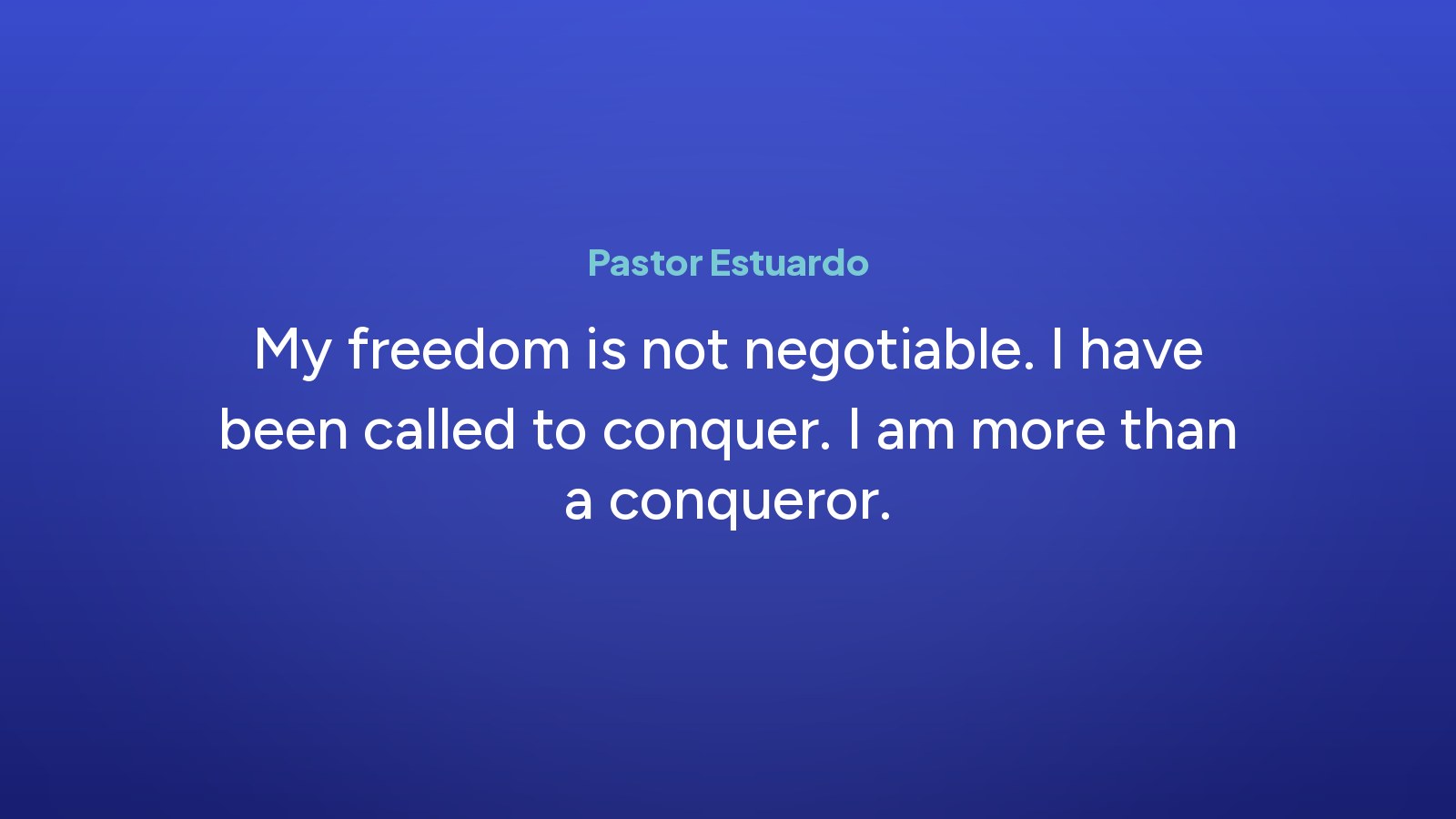
God wants a total victory for us, he said. "Not half a victory." Not "I'm almost there."
That took him back to Joshua, the book we keep returning to. Joshua had led Israel through many victories and defeated many kings, and some of the tribes already had their land. Then he got old, and the Lord told him so. Then the Lord told him something else.
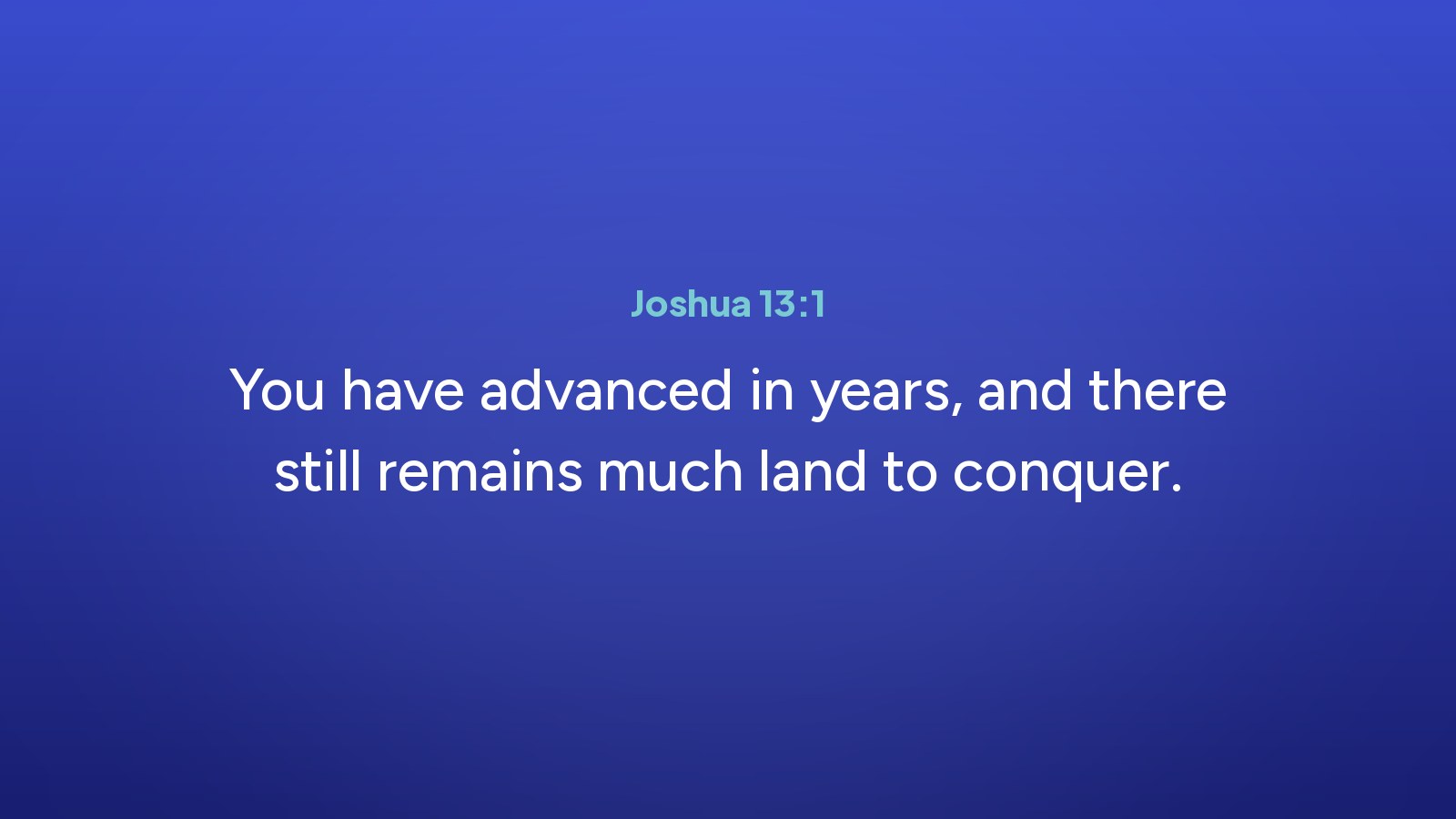
"If you think that you already reached the place that you needed to get to, there's a great problem," Pastor Estuardo said. If you're standing today, it's because there's still something to reach. He admitted life looks different than it did at 25 ("that was just last year"), then left that alone and got to the point: there are things we still have to do. As a parent, as a leader, in your community, there's still much to conquer. So move quickly. He had a word for the young people who finished school and decided that was their place, too: the Lord has something more for you.
No matter how far we've come, there will always be higher levels.
He had us say that one twice. Then he warned against believers who settle so quickly, and sometimes for so little. "If you are conformed with what you have and with what you are, you have not had an encounter with God as you should have." If someone hears that and says the pastor is crazy, well, he would like a few more crazy people to come with him. He apologized right away. He wasn't calling anyone crazy.
He told us about the last moment with his father, when his father came to say goodbye. What he had to do, his father said, he had already done, and now he had to go. "What an assurance." Pastor Estuardo is in no hurry to go, he said. He just wants to be able to tell the Lord the same thing: I know where I'm going, and I did what you sent me to do.
Being called to conquer means war, he said, and in a war there are falls and soldiers get hurt. To close, he had the lights turned down and showed a clip from a movie about Desmond Doss, apologizing first because it was a little strong. As he told it, Doss spent a whole night on ground the Japanese army held, without using a weapon or firing a single shot, searching for men and rescuing them. Under all that fatigue he kept praying, "Please, Lord, help me get one more." When the night ended, he had rescued seventy-five men.
We're going to tell the Lord the same thing, Pastor Estuardo said. Maybe it sounds like "give me one more chance," for a child you gave up on. One more group of my friends, Lord. One more group of young people. When he saw Doss's bloodied hands, he thought of Jesus on the cross, and he doesn't think Jesus was saying, "Father, give me one more." "He was saying, give me the world."
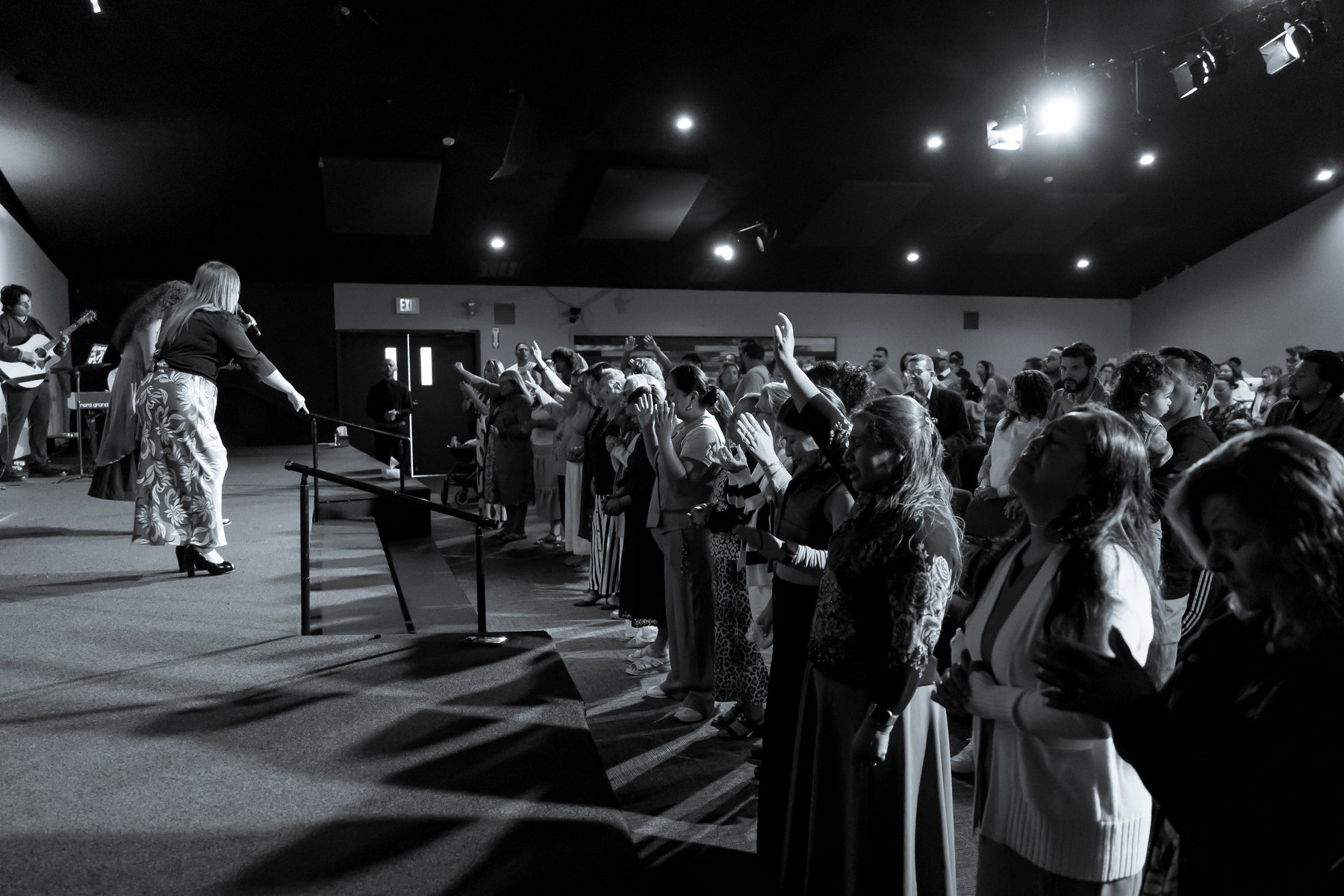
With our eyes closed, we prayed it with him: "Please, Lord, help me get one more." And he added, "I know he'll do it again."
The main points
- Our freedom in Christ is not negotiable, and that includes our children and our children's children.
- However far we have come, there is still land to conquer, and God wants a total victory for us.
- Settling for partial victories means we haven't met God the way we should.
- Being called to conquer means asking God for one more person to reach.
Questions for this week
For your time with God, your family or your group.
- Where is the world trying to set conditions on your freedom in Christ, or your family's?
- Is there a place you settled into as if it were the end of the road?
- Which partial victory have you been calling enough?
- Who is the "one more" God is putting on your heart this week?
Common questions
What does "still much to conquer" mean?
It comes from Joshua 13:1, where God tells Joshua, old and after many victories, that much land remains to be conquered. Pastor Estuardo applies it to us: however far we have come, there will always be higher levels, and God wants a total victory for us ("not half a victory").
What did Pastor Estuardo mean by "our freedom is not negotiable"?
When Pharaoh offered to let the adults go and keep the children, Moses refused. The freedom we have in Christ comes without conditions, and parents and grandparents don't bargain it away for their children, because the children belong to Christ.
What was the movie clip near the end?
A scene about Desmond Doss, who, as Pastor Estuardo told it, spent a night rescuing men without using a weapon or firing a shot, praying "Lord, help me get one more," until he had rescued seventy-five. Pastor Estuardo made that prayer our own.
Was this message preached in English or Spanish?
Both. Pastor Estuardo preached in Spanish with live English interpretation. Every Sunday celebration at Living Waters is in both languages.