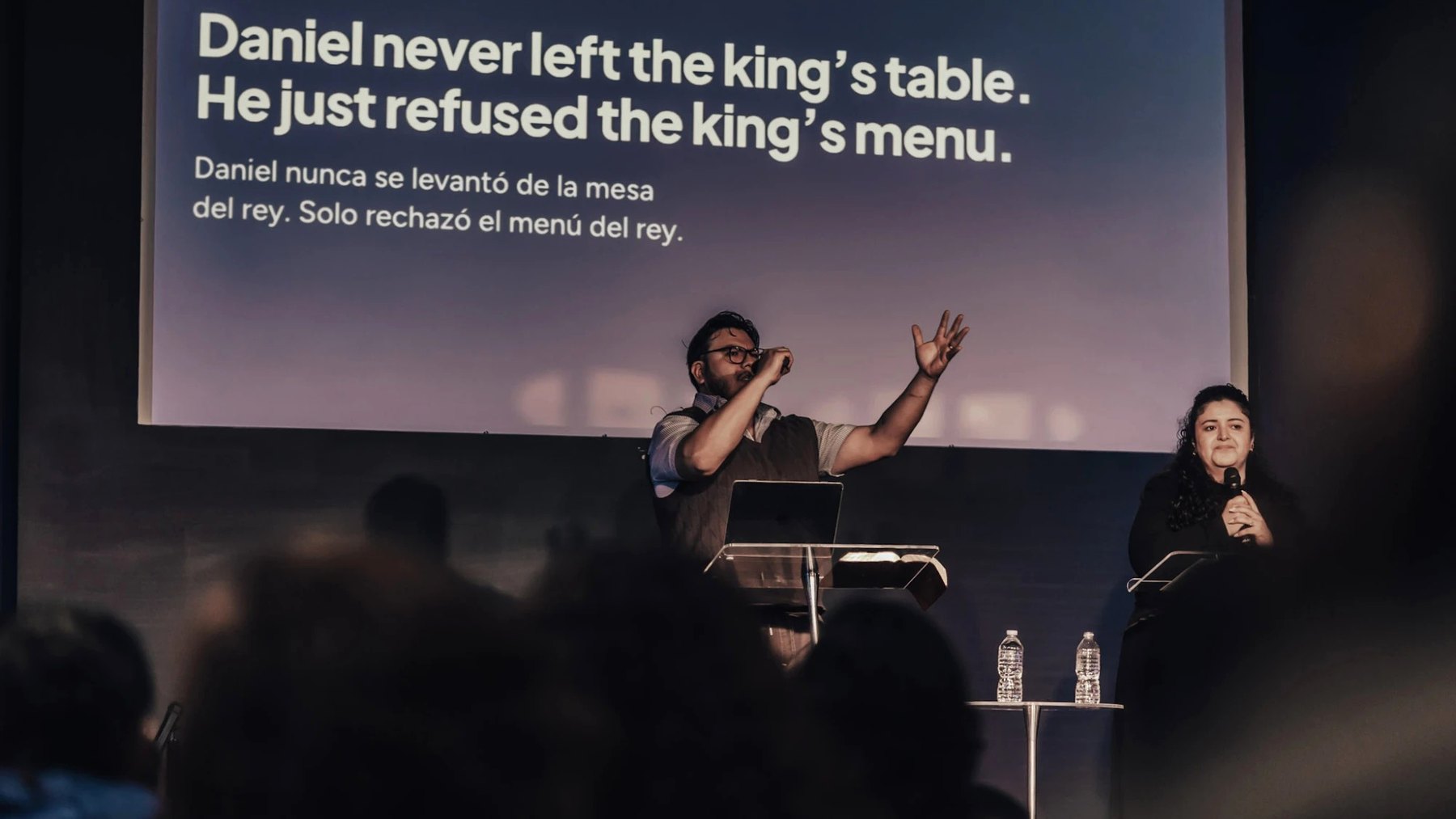
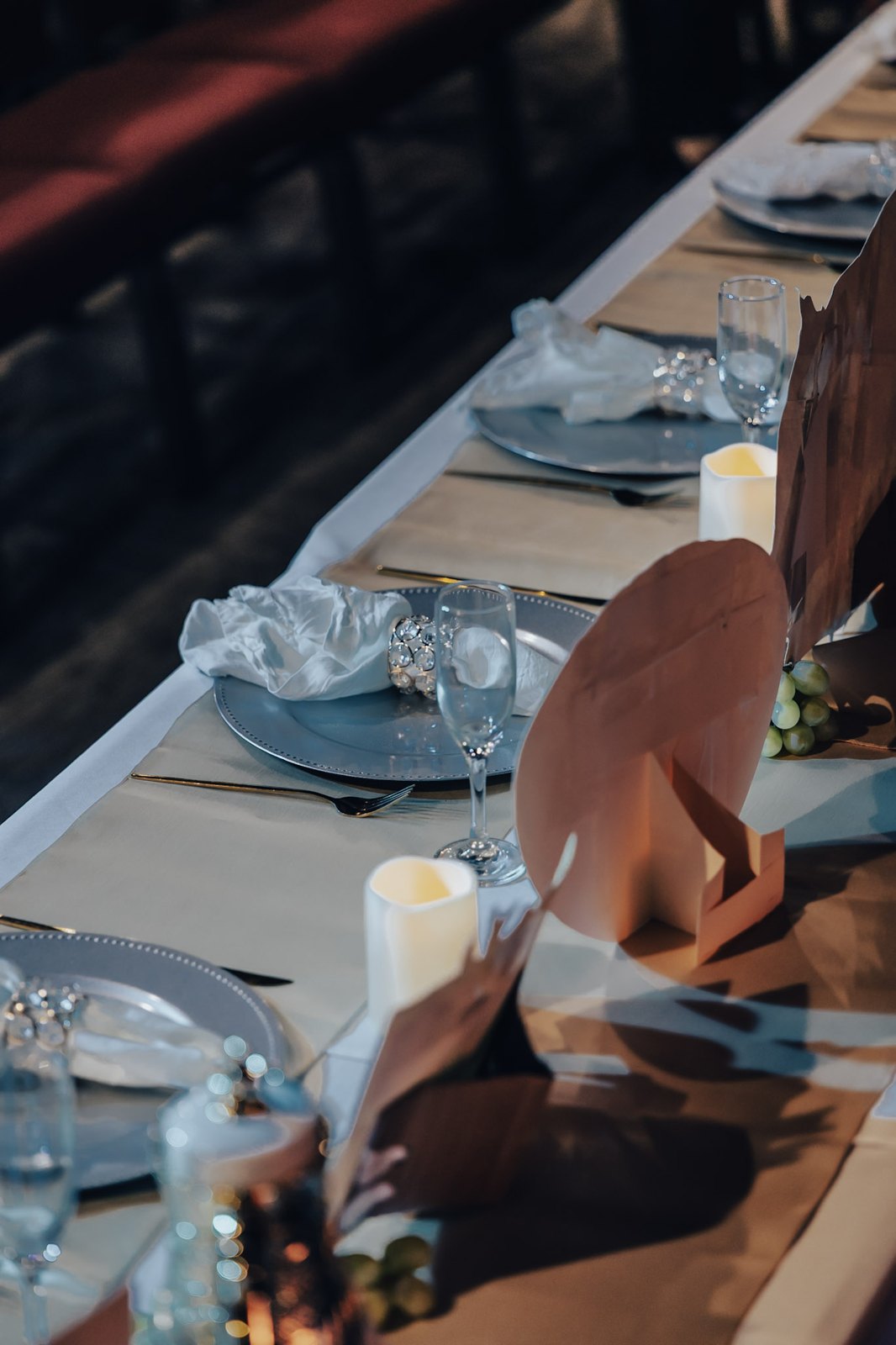
Thanksgiving morning, the long tables were still up at the front of the sanctuary, set with food. ("They asked me to announce that this isn't take-home," David said. He had already eaten a couple of the grapes.) It was his first time preaching, and he started by thanking the pastors and leadership. If his hands were shaking a little, he told us, we knew why.
He began at a table most of us know. When he was twelve or thirteen, the whole family came over for the holiday: blood family, church family, and anyone from church who had nowhere else to go. There was a table for the adults and a table for the kids, and he got sent to the kids' table. He hated it. "Nobody chooses the kids' table. You get sent there."
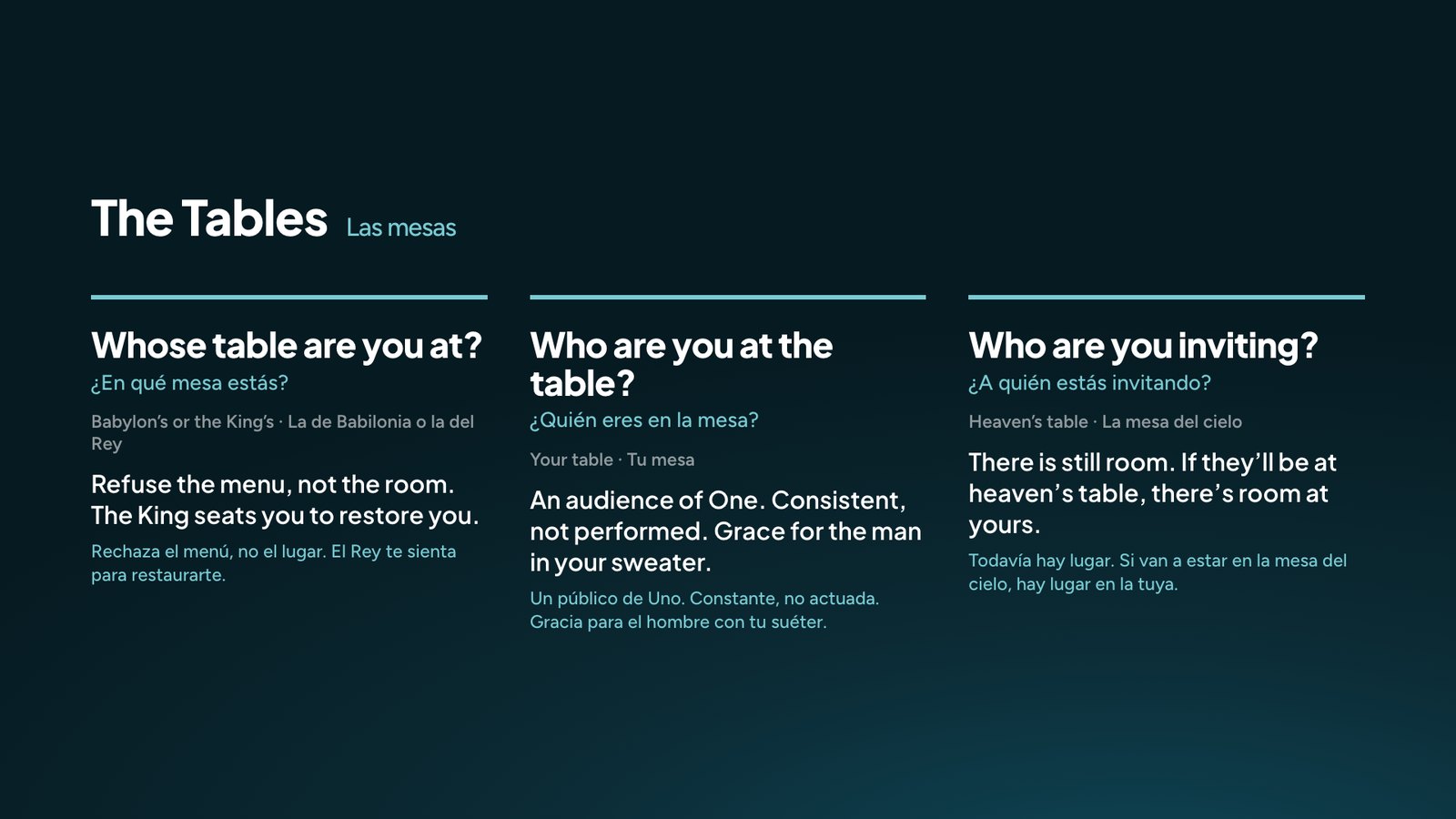
Then we prayed the Lord's Prayer together, and he asked about one line in it. We pray "your kingdom come, your will be done, on earth as it is in heaven" so often we could say it in our sleep. Where does it actually start? "I believe it starts at your table." But not every full table is a good table. You can set out the nicest plates and the best food, fill every seat, and still be feeding on poison. So before asking who's at your table, he gave us three questions to carry home: who is setting your table, who are you at the table, and who are you inviting?
Babylon's table
About 2,600 years ago, Babylon was the superpower of the world, and its king was Nebuchadnezzar ("if you've never tried to say that out loud in front of a crowd, it's a workout"). When he took Jerusalem, he didn't just take the gold. He took the best and brightest young men of Judah, most of them teenagers. To make the point, David had a few of our men stand up so we could picture them.
Babylon's plan wasn't to break those young men. It was to remake them. Three years of Babylon's language and literature, a daily portion from the king's own table, and new names. Every Hebrew name pointed to God. Daniel means "God is my judge," so every time someone called him to dinner, they preached a little sermon. Babylon changed the sermon: Daniel became Belteshazzar, and Hananiah, Mishael and Azariah became Shadrach, Meshach and Abednego.
"Babylon didn't drag them away from God in chains. It sat them down at a feast." That's still how it works, David said. It rarely says "renounce your God." It says "have a seat, you've earned this, try this," and it keeps setting your table until one day you realize you've been eating its food for years.
Picture an invitation to the president's house, the finest food in the land. Daniel looks at all of it and asks for vegetables. Daniel 1:8: "But Daniel made up his mind that he would not defile himself with the king's food or wine." The Hebrew says he set it upon his heart. He didn't decide with a plate in front of him and roast turkey in the air. He had settled it before he ever sat down. "Character isn't decided when the pressure arrives. It's decided before." Carbon becomes a diamond under pressure because of what it already is. Put dirt under the same pressure and you won't get a diamond.
And watch how Daniel said no. He didn't flip the table, call down fire or go on Yelp later to trash the food. God gave him favor with the official, and Daniel asked respectfully for a ten-day test. Then he stayed, serving the king with excellence for the rest of his life, through kings and empires. "Daniel never left the king's table. He just refused the king's menu."
There's another table some of us could quote in our sleep, one of David's father's favorite verses, Psalm 23:5: "You prepare a table before me in the presence of my enemies." God sets it, and he doesn't clear the room first or wait until you have the money or the right house. In verse 6, the word for goodness and mercy "following" you means to pursue. They chase you down, the way David chases down Hermana Juana when she brings food and Sister Susan when she brings her banana bread. "And yes, I'm accepting donations."
So who set your table this morning? If the first thing you fed on was your phone, the algorithm did. If you feed all week on approval, comfort, success or outrage, Babylon is setting your table one plate at a time. You don't have to leave your job, your school or your city. You do have to decide before you sit down. "You can sit in Babylon without Babylon sitting in you."
Who are you at the table?
In the same chapter as the Lord's Prayer, Jesus says not to pray like the hypocrites who love to be seen, but to go into your room, shut the door, and pray to your Father who is unseen (Matthew 6:5-6). "Hypocrite" was a Greek theater word for an actor behind a mask. And some of us pray differently depending on who's in the room. At home it's a quick prayer before the food. At a prayer meeting it's "O Lord, God of Abraham, Isaac and Jacob" while the mac and cheese gets cold.
Jesus isn't against praying in public. He also said to let your light shine so people see your good deeds and glorify your Father (Matthew 5:16). The question is whose glory it's for. David said many of us get stuck worrying about what other Christians will think, so afraid of being seen with sinners that we forget the greatest commandment.
Daniel's faith wasn't a show. Decades later, under a law that made praying to anyone but the king a crime, he went home, opened his windows, and prayed three times a day, "just as he had done before" (Daniel 6:10). That's David's favorite part. It wasn't a reaction to pressure. It was a habit long before the pressure came.
Then Daniel 4. Nebuchadnezzar, the king who destroyed Daniel's city, had a dream that meant judgment on him. Daniel's answer: "My lord, may the dream apply to those who hate you, and its interpretation to your enemies!" He was distressed for the king. "Daniel loved the man who took everything from him."
"I'll be honest," David said. "I'm still learning that." A few weeks ago his car was stolen, in a hard season of one payment after another. The police found it within a day, and the man who took it was asleep inside, using David's sweater as a blanket. His first reaction, on the phone with his wife, Abby, wasn't holy. Then, in the middle of the sentence, the Lord stopped him: he's lost. What if he needed warmth? What if he had nowhere to stay? When the police asked about charges, David said no. "I'm not telling you this because I got it right. I'm telling you because I got it wrong at first."
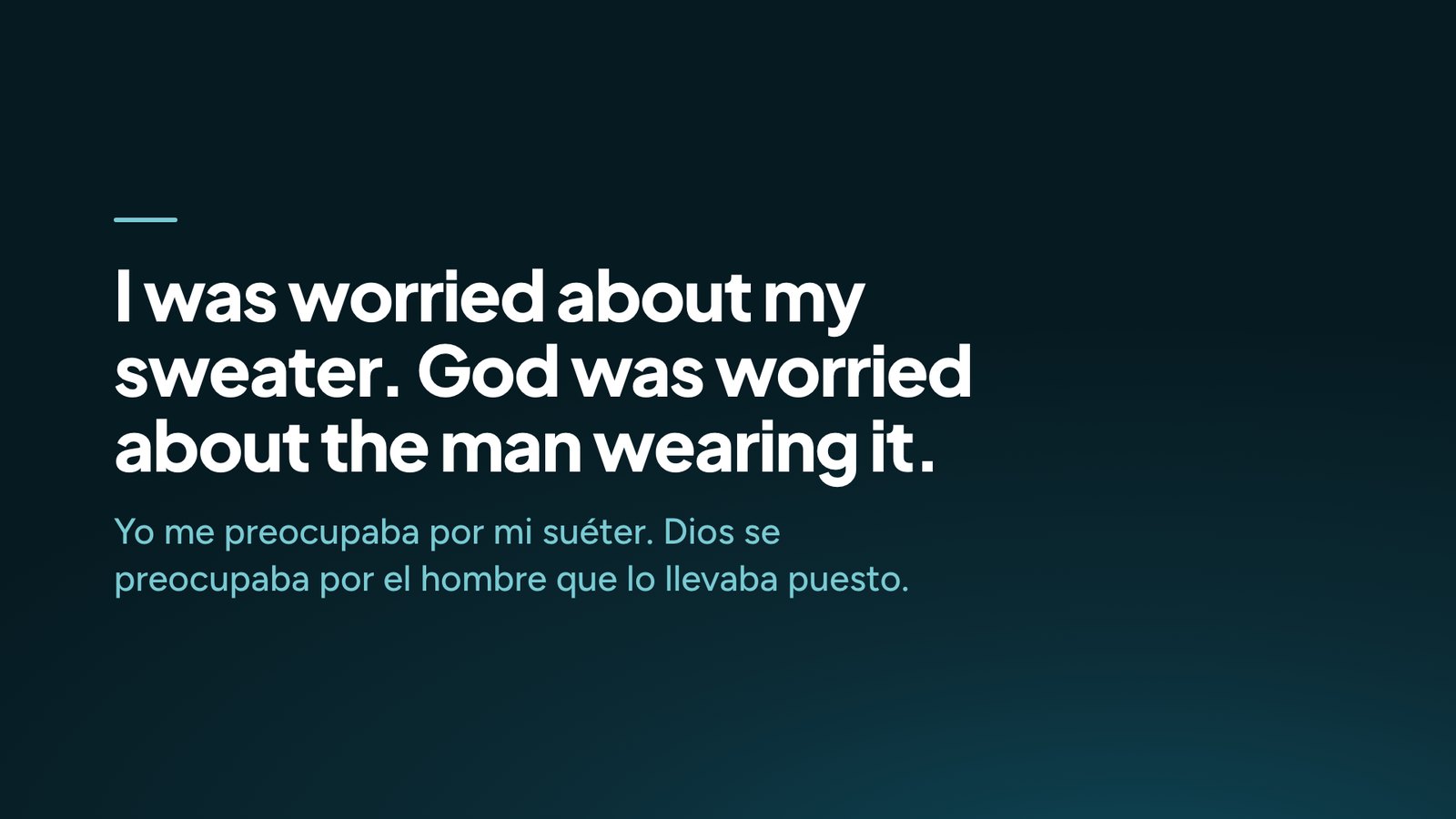
"I was worried about my sweater. God was worried about the man wearing it." The same prayer that says "your kingdom come" says "forgive us our debts, as we also have forgiven our debtors." In one breath Jesus teaches us to ask for daily bread, and in the next, to forgive.
Who are you inviting?
"We are not of this world" is true, David said, but Jesus also prayed, "As You sent Me into the world, I have also sent them into the world" (John 17:18). We can't stay inside a Christian bubble while children die across the world and brothers and sisters are persecuted for their faith. And you don't have to cross the world to start. Bring heaven to your table, your conversations, your finances. He told us he prays for wealth so he can hand Living Waters a check to feed people. But God isn't waiting for anyone to get rich. "If I can just invite one to the table."
When God's people were carried off to Babylon, God told them through Jeremiah to seek the prosperity of the city where he had sent them and to pray for it (Jeremiah 29:7). Love God, love your neighbor, go and make disciples. "I was naked and you clothed me."
The kingdom of God, he said, is wherever God's will is done: in heaven completely, and on earth one home, one table, one conversation at a time. Then he told us about a day he was driving home on his phone and the Lord told him to look up. A woman who is often on that corner was hungry. He had about twenty dollars in his account. He bought her food and they talked, and before he left she told him no one had talked to her like a human being in ten years. He invited her to church and offered her a ride. She asked whether we would accept her. Jesus' answer is already written: "Come to Me, all you who are weary and burdened" (Matthew 11:28).
The King's table
The last table belongs to King David. Mephibosheth was the grandson of Saul, the king who hunted David, and he was lame in both feet, living in Lo-debar, a name that means "no pasture." A new king usually got rid of the old king's family. Instead David asked, "Is there anyone left of the house of Saul to whom I can show the kindness of God?" and told Mephibosheth, "you will always eat at my table" (2 Samuel 9:3, 7). Mephibosheth called himself a dead dog. That's how a lot of us see ourselves before God: too broken, too far gone, too much history.
David asked us to picture that table: Mephibosheth seated, the long tablecloth over his lap. Once he sits down, you can't see his feet or what's broken. You only see a son of the king.
The religious leaders said it about Jesus as an insult: "This man welcomes sinners and eats with them" (Luke 15:2). It's the best news in the world. "God proves His love for us in this: While we were still sinners, Christ died for us" (Romans 5:8). Not after we cleaned up. While we were still in Lo-debar. And Jesus offers to come to our table too: "Behold, I stand at the door and knock" (Revelation 3:20).
Daniel showed us how to sit at the wrong table: stay faithful, refuse the menu, love the people around you, even your enemies. Mephibosheth shows us how to be welcomed at the right one, carried there by a King who keeps his promises. "Heaven's table isn't a reward for the clean. It's a rescue for the hungry." There's no kids' table in the kingdom of God, David said, no folding chairs and no corner seat. The Lord has a seat at his table for you, as a son or a daughter of the King.
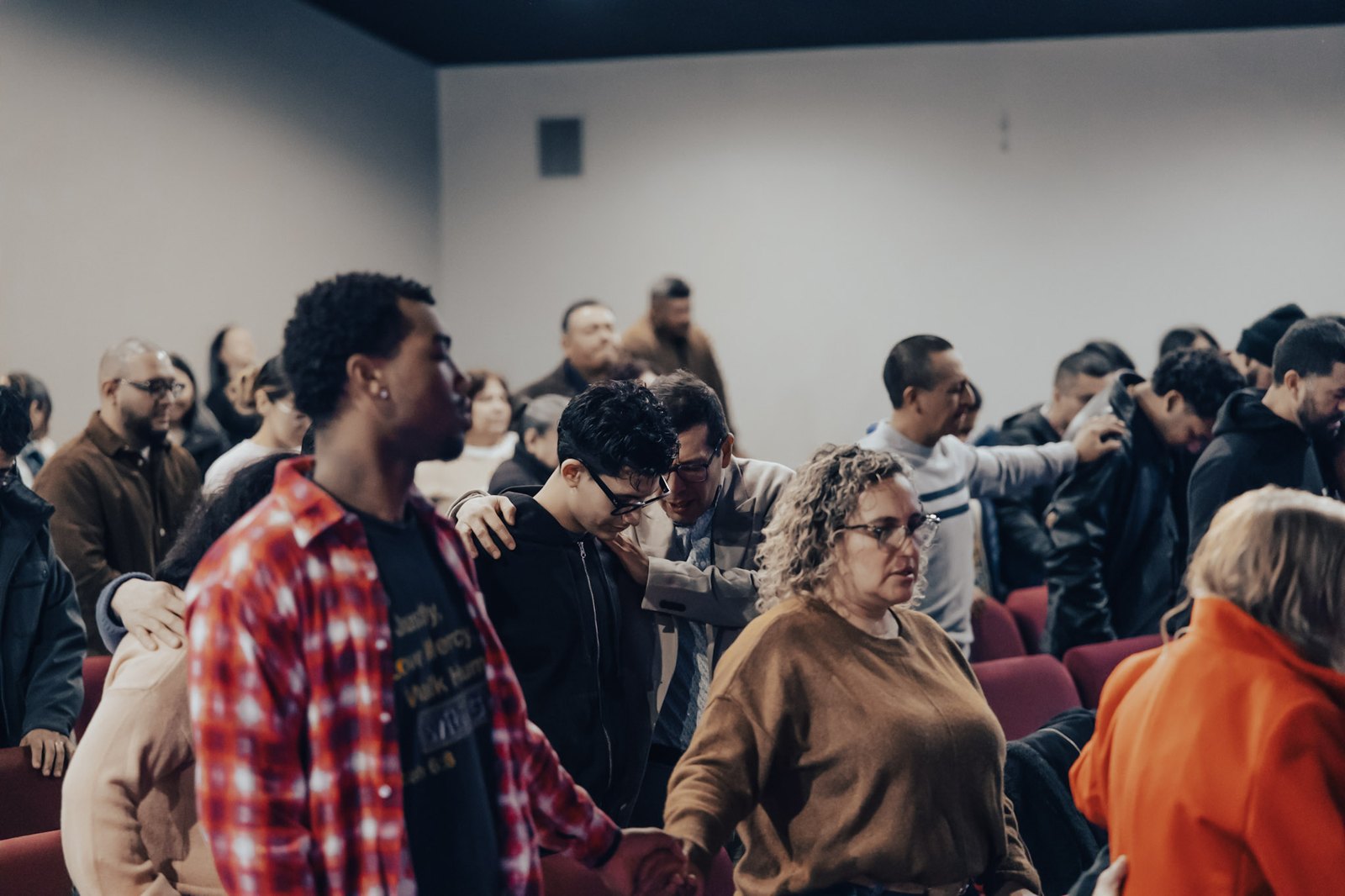
With every head bowed, he invited anyone who had never opened the door to Jesus to pray with him, and he led the prayer.
The main points
- We pray "on earth as it is in heaven." It starts at your own table.
- Babylon rarely attacks faith head-on. It sets the table. Daniel stayed at the king's table and refused the king's menu, and he decided before the pressure came.
- Who we are at the table matters more than who's watching. Daniel prayed "just as he had done before," and he loved the man who took everything from him.
- We're not of this world, but we're sent into it. One invitation to one person brings heaven to a table.
- Mephibosheth didn't earn his seat. He was carried to it. Heaven's table is a rescue for the hungry.
Questions for this week
For your time with God, your family or your group.
- Who or what set your table this morning?
- Is there a "menu" you've been eating from without noticing?
- Do you pray or act differently depending on who's watching?
- Who have you labeled an enemy that God is asking you to see?
- Who is one person you could invite to your table this week?
Common questions
What does "on earth as it is in heaven" mean?
It's a line from the Lord's Prayer (Matthew 6:10). "Your kingdom come" and "your will be done" ask for the same thing in two ways: the kingdom of God is wherever God's will is done.
Why did Daniel refuse the king's food?
Daniel 1:8 says he made up his mind not to defile himself. The food likely wasn't clean under God's law and had likely been offered to Babylon's idols, and eating from the king's table meant depending on the king. He refused respectfully and stayed to serve.
Who was Mephibosheth?
The son of Jonathan and grandson of King Saul, lame in both feet. In 2 Samuel 9, King David brings him from Lo-debar, restores his family's land, and gives him a permanent seat at the king's table because of his promise to Jonathan.
Was this message in English or Spanish?
David preached in English with live Spanish interpretation. Every service at Living Waters is in both languages.